












Article
Blog
Insights, research, and practical guidance to help security teams prioritize risk, accelerate remediation, and stay ahead of modern threats.
Most recent
Hackuity in the News
5 minutes
read
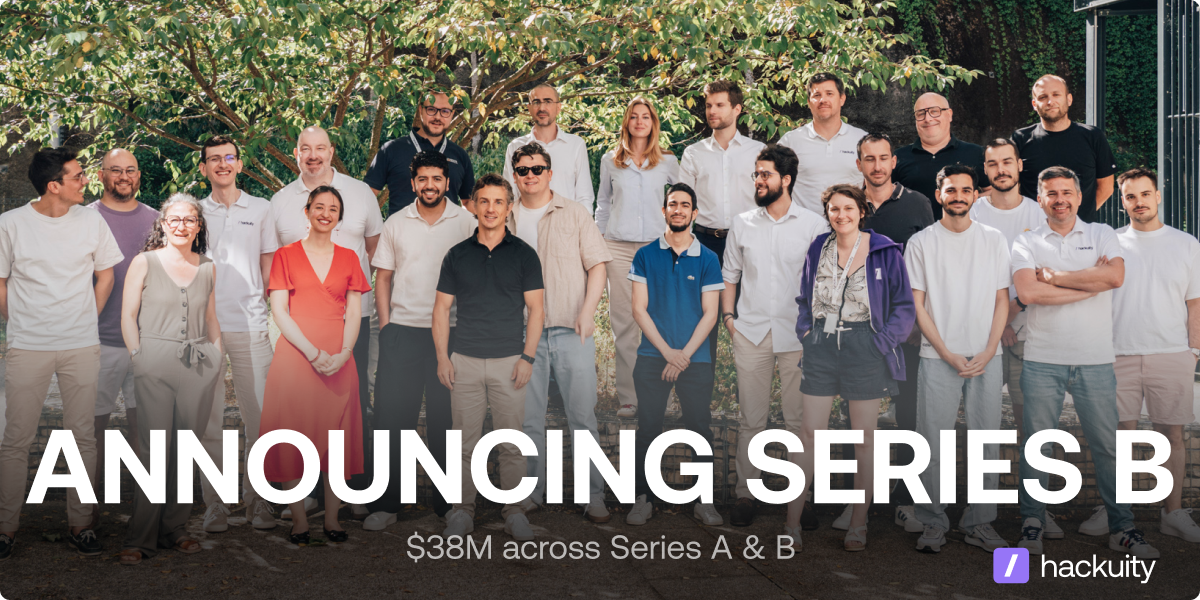
Hackuity raises $19M Series B to scale the AI-powered Vulnerability Operations Center
Today we announced $19 million in new funding, bringing Hackuity's total funding to $38 million. The round was led by Forgepoint Capital International, alongside our existing investors Bright Pixel, Bpifrance and Seventure Partners.


September 16, 2026
Library
Thank you! Your submission has been received!
Oops! Something went wrong while submitting the form.

Article
Hackuity in the News
5min
read
How the Vulnerability Operations Centre serves as an essential mission control for vulnerabilities
The vulnerability management ‘to do’ list can feel like a perpetual loop. No sooner have the latest batch of security updates been handled than it’s time to start over again.
August 25, 2026

Article
Product
10 min
read
Hackuity’s new RBVM Platform 2.0 brings enhanced risk prioritisation
Hackuity, the risk-based vulnerability management provider, today announced the launch of Version 2.0 of its next generation platform, featuring major enhancements to bring further support to organisations in prioritising risks.

August 25, 2026

Article
Expert View
8 min
read
From Risk to Decisions: Why SSVC Is the Missing Piece
You've got better severity scores. You've got risk context. Now you need to actually decide what to do. This is the final piece of the puzzle. In our first article, we covered how CVSS v4 improved severity measurement. In the second, we explored how TRS adds threat and environmental context to calculate actual risk. But even with accurate severity and comprehensive risk scoring, most vulnerability management programs stall at the same point: turning data into consistent decisions. Your team knows which vulnerabilities are risky. But how do you consistently decide what gets fixed this week versus next month? How do you explain those choices when engineering teams push back? SSVC (Stakeholder-Specific Vulnerability Categorization) solves this. It turns your risk signals into defensible, repeatable decisions.

August 25, 2026

Article
Hackuity in the News
5 min
read
From noise to action – how context transforms vulnerability management?
I see many organizations fall into the “patch everything now” trap, treating any delay as a ticking time bomb. Ironically, this constant sense of urgency can make for a less efficient patch management process. Chasing every CVE as...

August 25, 2026

Article
Hackuity in the News
3 min
read
Experts welcome EU-led alternative to MITRE's vulnerability tracking scheme
The EU-led framework will reduce reliance on US-based MITRE vulnerability reporting database.Cybersecurity experts have welcomed the launch of the new Global CVE Allocation System (GCVE) as a positive move toward more robust vulnerability..

August 25, 2026
Article
Expert View
5 min
read
CVSS v4, Two Years On: What The Data Really Say
When CVSS v4 launched in November 2023, the security community had questions. Would organizations actually adopt it? Would the refined scoring methodology deliver on its promises? And most importantly, would it help security teams make better decisions? Two years in, we finally have answers. And they're not what everyone expected.
August 25, 2026